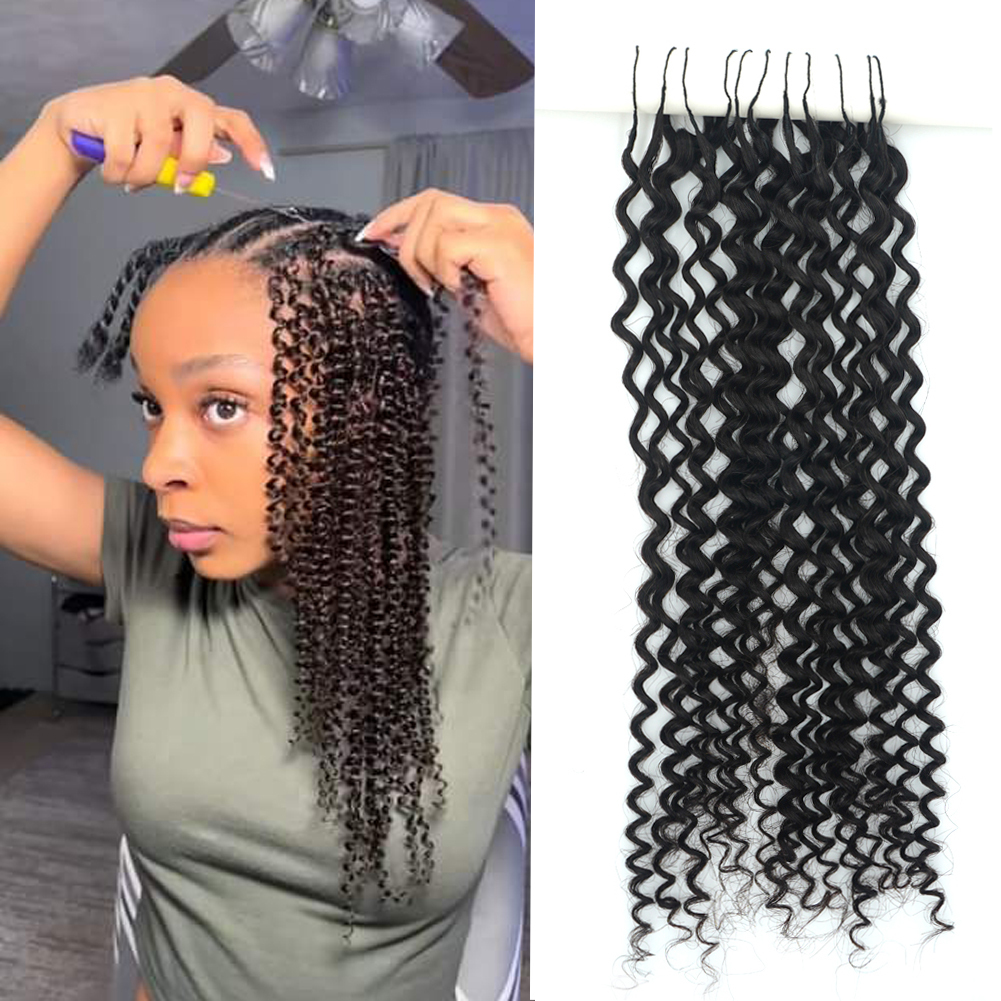
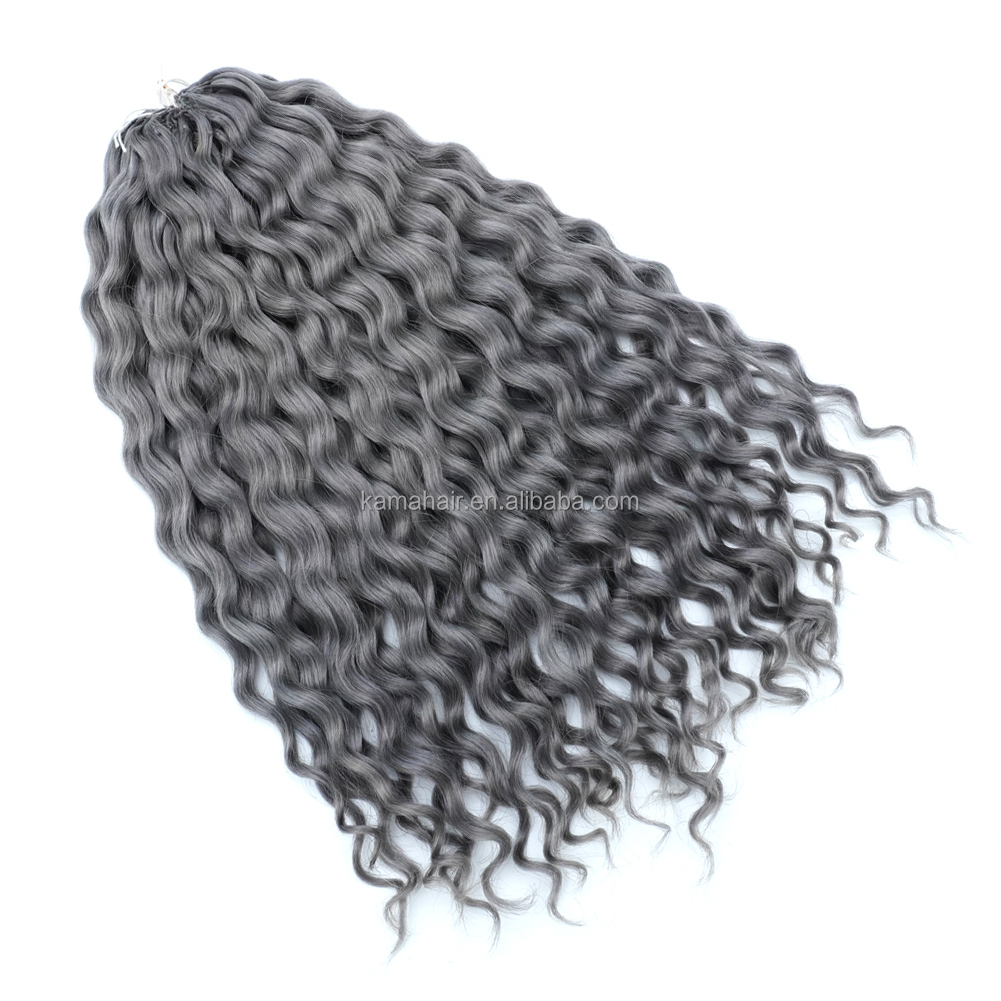
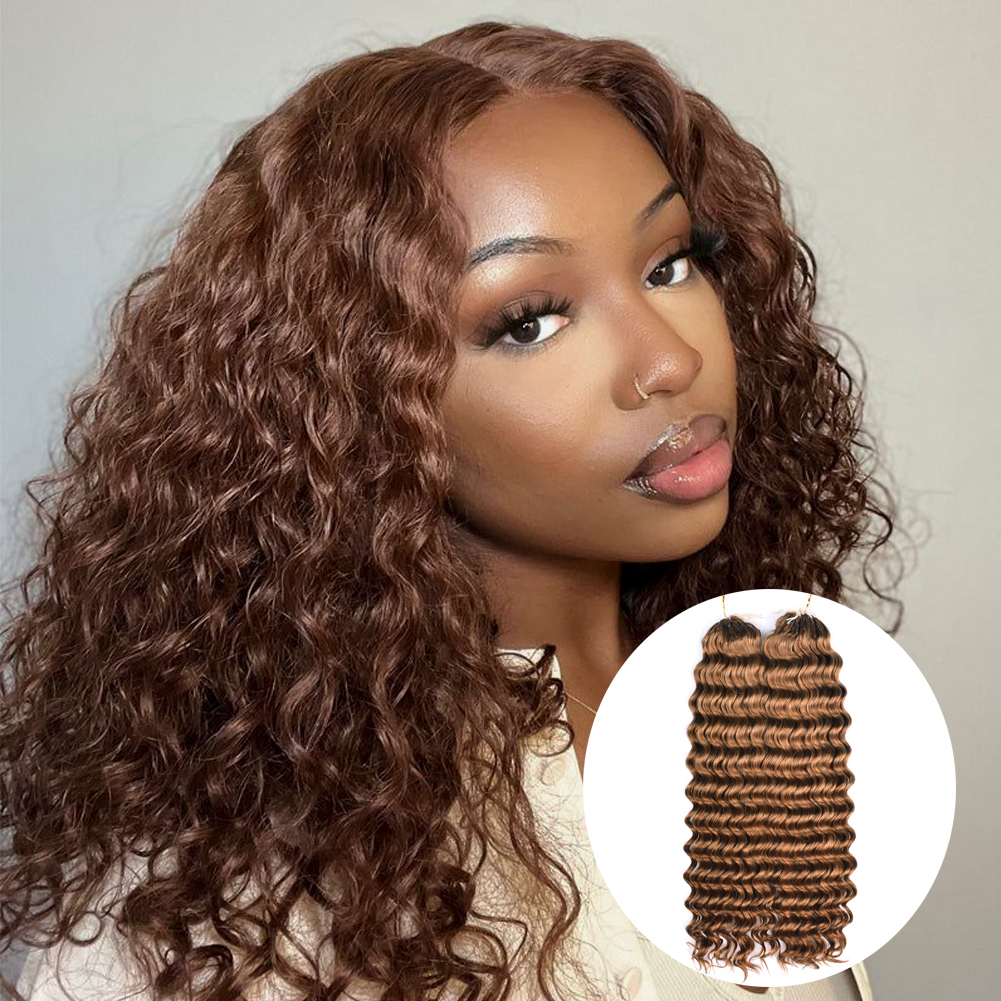
Fine and thinning hair presents a specific engineering problem: the client wants visible volume, but the scalp cannot carry the mass that volume usually requires. Feather-tip formats were developed for exactly that constraint - volume in the visual line, with less concentrated weight at the anchor point.
1. What Makes a Feather Tip Different
A standard extension concentrates mass at the root, because that is where the attachment lives. A feather-tip strand distributes the fibre differently along its length and finishes in a tapered, feathered end rather than a blunt cut. The result reads lighter in the hand and, more importantly, behaves lighter on the scalp during the weeks that follow installation.
Feathered crochet formats extend the same logic to crochet work. Because the tip is tapered rather than squared off, the transition between installed fibre and natural hair is softer, which matters most on clients whose own density cannot visually mask a junction point.
2. Where They Work Well
- Receding or fragile hairlines: tapered ends reduce the visual weight at the perimeter, so the style does not look like it is being pulled away from the face.
- Low-density crowns: volume can be added in the zone that needs it without loading the whole head evenly.
- Clients transitioning from relaxed to natural: the softer junction tolerates two textures sitting alongside each other during the transition.
3. Where They Do Not Suit
Feather tips are a poor choice when the client wants tight, uniform definition across a dense grid, because the tapered finish is specifically designed to look gradual rather than uniform. They are also a weak match for high-tension structural styles where the installation is expected to carry significant weight. In those briefs, a denser pre-formed strand is the correct tool.
4. Consultation Questions That Settle the Decision
Ask where the client feels her own hair is thinnest, how much volume she wants to see in photographs, and whether she intends to wear the style pulled back. Front-facing tension and perimeter density are the two variables that most often make a feather-tip installation succeed or disappoint, and both are settled by listening rather than by measuring.
The Feather-Tip Lightweight Volume Suite
Feather-tip crochet and deep curly feathered formats engineered to build volume without concentrating weight at the root.